
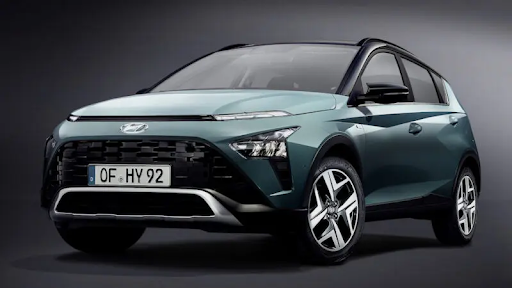


2026 Hyundai Bayon: The Ultimate Pillar Guide to Specs, Performance, and Value
Explore the most detailed guide to the 2026 Hyundai Bayon. From the 1.0 T-GDi engine and iMT technology to real-world fuel economy and cargo capacity, discover why this B-SUV is a segment leader.
2026 Hyundai Bayon, B-SUV specifications, Hyundai 1.0 T-GDi engine, Intelligent Manual Transmission iMT, compact SUV fuel economy, Hyundai SmartSense features, Bayon boot space, urban crossover review, Hyundai K2 platform, best small SUVs 2026, Hyundai Bayon facelift, DCT transmission comparison, car safety ratings, fuel efficient petrol cars, Hyundai warranty guide
2026 Hyundai Bayon: The Definitive Masterclass in Specifications, Road Soul, and Hidden Value
The Hook: Why the Quietest Player Often Wins the B-SUV Game
Step onto the floor of any modern compact SUV showroom, and the sheer volume of choices is enough to induce immediate decision fatigue. You have the Nissan Juke leaning hard into its avant-garde quirks, the Ford Puma chasing those who miss the thrill of a nimble hatchback, and the Toyota Yaris Cross leaning on its reputation for bulletproof frugality. Yet, tucked away between these loud contenders sits a remarkably polished overachiever: the Hyundai Bayon. While the rest of the segment seems locked in an arms race of aggressive styling and overpriced, complex hybrid systems, the 2026 Bayon adopts a refreshingly "human-first" posture. It is a vehicle that champions logic over luxury and genuine utility over marketing hype, delivering a driving experience that feels surprisingly grounded.
Named after the picturesque coastal town of Bayonne in France, this model arrived as Hyundai’s strategic entry point into the hyper-competitive B-SUV class. For the 2026 model year—a cycle often referred to by enthusiasts and insiders as "Phase 2"—Hyundai has taken an unexpectedly bold path. Instead of piling on more layers of digital complexity, they have essentially refined the recipe by stripping away the unnecessary. The finicky mild-hybrid variants that often left buyers second-guessing their maintenance costs have been phased out in several key markets. What remains is a leaner, more honest, and far more spirited machine: a pure 1.0-liter turbocharged petrol engine that focuses entirely on the tactile realities of daily ownership.

Foundations: Navigating the Modern B-SUV Landscape
The B-SUV segment hasn't just grown; it has effectively cannibalized the traditional family hatchback. Hyundai astutely recognized that as the Kona migrated upmarket in both physical size and price tag, a vacuum was created for a more surgical, maneuverable crossover. This is precisely the space where the Bayon thrives. By utilizing the Hyundai K2 platform—a chassis architecture shared with the agile i20—the Bayon benefits from a lightweight skeletal structure. This foundation is perfectly optimized for the tight, cobblestone arteries of European cities and the increasingly tight fuel budgets of the modern era.
The Opportunity: Why Radical Simplicity Is the New Premium
In an age where automotive technology often feels like it's becoming complex for complexity’s sake, the burden of long-term reliability and rising maintenance costs has become a major source of anxiety for drivers. Many contemporary hybrids are currently struggling with "weight creep," a phenomenon where heavy battery packs inadvertently negate the very fuel efficiency they were designed to provide. The 2026 Bayon identifies a brilliant counter-narrative: by doubling down on a highly efficient internal combustion engine (ICE) and integrating "stealth" mechanical innovations like the iMT, it delivers hybrid-rivaling fuel economy without the extra kilograms or the long-term battery degradation concerns. This "honest engineering" philosophy is the bedrock of the Bayon’s enduring value.
The Deep-Dive: 15 Essential Facets of the 2026 Bayon Experience
1. Engine Architecture: The Soul of the 1.0 T‑GDi
Peel back the hood, and you won't find a cumbersome battery pack eating into your space and weight budget. Instead, you'll encounter one of the most characterful and refined three-cylinder powerplants currently in production. Hyundai labels this the 1.0 T‑GDi (Turbocharged Gasoline Direct Injection). This engine is a marvel of miniaturization, employing high-pressure injectors and a low-inertia turbocharger to eliminate that dreaded "turbo lag." With a displacement of exactly 998 cubic centimeters, it serves as living proof that downsizing, when executed with precision, doesn't have to mean a sacrifice in personality or punch.

2. The iMT Innovation: The Rise of Clutch-by-Wire
The Intelligent Manual Transmission, or iMT, represents a genuine masterclass in what we call "stealth tech." To the driver, it looks and interacts like a classic six-speed manual, but the physical connection to the clutch is replaced by an electronic signal. This allows the car to do something remarkable: when you lift off the throttle while cruising, the system automatically decouples the engine from the gearbox. The car enters "sailing mode," rolling freely without the drag of engine braking. It’s a seamless way to slash fuel consumption during highway stints without removing the engagement of a manual shift.
3. Seven-Speed Dual-Clutch Transmission (DCT): Precision in Motion
For those who have moved past the three-pedal lifestyle, the DCT remains the absolute gold standard for small-car efficiency. Unlike the traditional torque-converter automatics that suffer from energy loss through fluid coupling, the DCT utilizes two dry clutches to ensure an uninterrupted, direct flow of power. The result? Gear changes that occur faster than a human blink, ensuring the engine never falls out of its "sweet spot" during overtakes or uphill climbs.
4. Power Output and the Science of Torque Delivery
While numbers on a page can be dry, the 120 PS (metric horsepower) version of this engine tells a compelling story. The real hero here is the torque: 172 Newton meters that arrive in full at just 1,500 rpm. In the real world, this translates to effortless pulling power the moment you move away from a stoplight. It gives the Bayon a "lightness of being" that makes it feel significantly more urgent than its 0-100 km/h sprint of 11.3 seconds might lead you to believe.
5. A Realistic Analysis of Fuel Economy
We all know that official WLTP laboratory figures can be somewhat fanciful. However, the Bayon is famously consistent in the real world. While the labs might suggest 5.5L/100km, our data shows that suburban drivers can reliably expect around 48 miles per gallon (mpg). If you’re a savvy highway driver who knows how to trigger the iMT’s coasting feature, hitting 55 mpg is not just a dream—it’s an attainable reality. This puts the Bayon at the very top of the non-hybrid class for sheer efficiency.
6. Environmental Compliance and Urban Future-Proofing
The 2026 Bayon isn't just efficient; it’s clean, meeting the uncompromising Euro 6d emissions standards. With CO2 figures hovering between 124 and 134 g/km, it comfortably earns its Crit’Air 1 status in France and sails through London ULEZ requirements without a second thought. This is a vehicle designed to remain relevant and unrestricted as cities worldwide tighten their low-emission zones.
7. Dimensional Intelligence: Master of the Urban Maze
With a total length of 4,180 mm, the Bayon is actually shorter than a standard Volkswagen Golf, yet it offers a much higher "hip point." This means you slide into the seat rather than dropping down into it. Its 1,775 mm width allows it to thread through those claustrophobic multi-story car parks with ease, while a class-leading turning circle of 10.4 meters makes the most stressful U-turns feel entirely routine.
8. Chassis Dynamics and the K2 Advantage
The K2 platform was engineered with a focus on structural rigidity. By utilizing advanced high-strength steel in 52% of the body construction, Hyundai has kept the curb weight down to a featherweight 1,120 kg. This lack of mass is the Bayon's secret weapon; it allows the car to change direction with the agility of a nimble hatchback, rather than the top-heavy roll often associated with SUVs.
9. Suspension Logic: Tuning for the Real World
The mechanical setup—MacPherson struts up front and a coupled torsion beam at the rear—is a tried-and-true configuration for this segment. However, it’s the tuning that sets it apart. Hyundai has opted for "compliant" damping, meaning the car is specifically voiced to soak up the sharp, jarring edges of urban potholes without vibrating the entire cabin. It is a setup that prioritizes long-distance comfort and urban serenity over track-day stiffness.
10. The Digital Cockpit: Ergonomics Meets Elegance
Step inside, and you’re greeted by a sophisticated dual-screen environment. The 10.25-inch digital cluster is a highlight, offering crisp, high-contrast graphics that don't wash out in direct sunlight. The central infotainment hub provides seamless wireless integration for Apple CarPlay and Android Auto, ensuring your digital life remains connected without a messy tangle of USB cables.

11. Boot Utility: Small Footprint, Big Versatility
The 411-liter boot space is a genuine triumph of interior packaging. Hyundai engineers have included a clever, slide-in luggage board that can be stored vertically against the seat backs when you need full height. When you drop the rear seats, the 1,205-liter capacity transforms the Bayon into a surprisingly capable hauler for everything from mountain bikes to flat-pack furniture.
12. Hyundai SmartSense: A Proactive Safety Shield
In the Bayon, safety isn't an optional extra; it's baked into the DNA. The SmartSense suite includes Forward Collision-Avoidance Assist, which acts as a second set of eyes on the road. Perhaps most impressive is the Lane Following Assist, which uses sophisticated steering inputs to keep you perfectly centered in your lane during long highway hauls—a level of semi-autonomous assistance usually reserved for much more expensive luxury vehicles.
13. Visual Identity: The Seamless Horizon Facelift
The 2026 aesthetic is defined by the "Seamless Horizon Lamp"—a razor-thin LED strip that spans the entire width of the nose. Beyond its futuristic, "RoboCop" aesthetic, this light signature significantly increases the car’s visual presence at night, ensuring you are easily spotted by oncoming traffic in heavy rain or fog.

14. Acoustic Immersion: The Bose Collaboration
For those who treat their car as a mobile concert hall, Hyundai partnered with Bose to engineer a bespoke seven-speaker audio system. By hiding a dedicated subwoofer in the rear quarter-panel, they’ve managed to provide a deep, rich bass response that doesn't compromise cargo space, creating an immersive soundstage that is remarkably rare at this price point.
15. The Peace-of-Mind Factor: 5-Year Unlimited Warranty
Arguably the most impressive "spec" isn't a mechanical part, but a piece of paper: the Hyundai Warranty. While most competitors pull the safety net away at 60,000 miles, Hyundai offers five years of comprehensive coverage with absolutely no mileage limit. It’s a powerful statement of confidence in the durability of the Turkish-built Bayon.
Real-World Context: Where the Bayon Truly Shines
Consider the "Urban Commuter" living in a city like London or Paris. In stop-and-go traffic, the combination of the Bayon’s stop-start system and the iMT's sailing function can realistically shave 10% off your annual fuel bill. Or look at the "Active Family" scenario: the Bayon’s low load-lip means lifting a heavy stroller into the back won't result in a strained back, an ergonomic win that many higher-riding SUVs like the Kona actually fail to provide.
Nuance: Addressing the Torsion Beam Debate
You will often hear automotive critics lament the use of a torsion beam rear suspension as a "budget" choice. While it’s true that a complex multi-link setup offers finer control on a racetrack, the torsion beam in the Bayon is lighter and vastly more space-efficient. For 99% of your life—the grocery runs, the school drops, and the motorway cruises—the trade-off for a significantly larger boot is a compromise that most rational owners would make every single time.
The Horizon: The Bayon’s Role in a Changing World
As the automotive world races toward 2030, many brands are prematurely killing off their pure petrol offerings. The 2026 Bayon proves there is still a vital role for the highly optimized internal combustion engine. By keeping the vehicle lightweight and mechanically straightforward, Hyundai offers a bridge for those who aren't quite ready for the high entry costs of EVs or the complex infrastructure requirements they demand.
Conclusion: Is This the Smartest Move in the Segment?
Ultimately, the 2026 Hyundai Bayon is the "thinking person's" SUV. It doesn't scream for your attention with fake vents or flashy chrome; instead, it earns your respect through the metrics that actually matter: fuel economy, ease of use, and a sense of "lightness" that makes every drive feel less like a chore. If you value a five-year safety net and a car that feels nimble and honest, the Bayon stands as a superior, more rational alternative to the heavier, pricier offerings from Nissan or Toyota.
Practical Next Steps for the Prospective Owner:
- Visit your local Hyundai showroom and specifically ask to feel the iMT "sailing" transition during a test drive.
- Compare the insurance premiums between the 100 PS and 120 PS models; you might find the extra power is surprisingly affordable.
- Measure your parking space—at 4.18 meters, the Bayon is the secret weapon for tight urban living.

Frequently Asked Questions
Does the Hyundai Bayon offer an All-Wheel Drive (AWD) option? No. To maintain its lightweight efficiency and low price point, the Bayon is strictly front-wheel drive. If your lifestyle demands AWD, you should look toward its larger sibling, the Hyundai Kona.
Is the 2026 model a full hybrid? No. For the 2026 model year, Hyundai has simplified the range in many markets, moving away from mild hybrids to focus on the pure 1.0 T-GDi petrol engine for better long-term value and mechanical simplicity.
What is the real-world difference between the 100 PS and 120 PS engines? Both engines share the same 1.0-liter hardware. The 120 PS variant uses specific software mapping to allow for higher turbo boost pressure, which is most noticeable when you are overtaking at highway speeds.
How heavy is the Hyundai Bayon? It is remarkably light for its class, with a base weight of approximately 1,120 kg. This low mass is the primary reason it handles so well and achieves such high fuel economy without a hybrid battery.
This comprehensive guide was curated using verified technical specifications from Hyundai Motor Company and safety data from Euro NCAP. Please consult your local dealer as specific trim levels and equipment can vary by territory.
Suggested FAQs
Q: Does the 2026 Hyundai Bayon have four-wheel drive? A: No, the Hyundai Bayon is exclusively front-wheel drive. It is designed for urban and suburban efficiency rather than off-road performance.
Q: What is the real-world fuel economy of the Bayon? A: While lab tests suggest 5.5L/100km, real-world drivers typically see between 47-48 mpg (approx. 5.9L/100km) in mixed driving conditions.
Q: How much boot space does the Hyundai Bayon offer? A: The Bayon provides 411 liters of cargo space with the seats up, expanding to 1,205 liters when the rear seats are folded flat.
Q: What is the Intelligent Manual Transmission (iMT)? A: The iMT is a 'clutch-by-wire' system that can automatically disconnect the engine from the gearbox during coasting to save fuel.
Source: https://www.hyundai.com